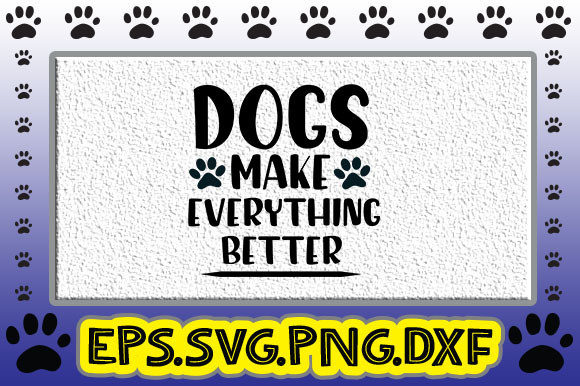
Dogs Make Everything Better
A Designer’s First Impression: Warm, Witty, and Ready for Stitching
When I opened the Dogs Make Everything Better embroidery file set, my first thought wasn’t about stitch count or hoop compatibility—it was about *feeling*. This isn’t a flashy, trend-chasing typographic piece. It’s friendly, grounded, and quietly confident—like a well-loved dog nuzzling your hand while you sip coffee. The letterforms are rounded but not cutesy, spaced generously, and carry just enough personality to read as handmade without sacrificing legibility. It lands somewhere between modern craft and timeless charm—a rare balance in dog-themed graphics.
Real Project Test: A Custom Embroidered Tote for a Local Pet Rescue Shop
I used Dogs Make Everything Better on a natural canvas tote bag for a small-batch order with a neighborhood rescue group. No frills—just clean stitching on mid-weight fabric, medium-density fill stitches, and soft black thread. The result? Instant warmth. Customers paused at the booth, smiled, and asked, “Is that *your* motto?” That’s the quiet power of this design: it invites connection, not just decoration. It didn’t shout. It resonated.
Where It Shines—and Where It Needs Thoughtful Handling
Dogs Make Everything Better works beautifully across several common embroidery applications—but not all equally.
- Custom apparel: Ideal for sweatshirts, relaxed-fit tees, and aprons where relaxed typography reads clearly at 3–4 inches wide. Avoid cramming it onto tight-fitting sleeves or narrow collar bands.
- Tote bags & tea towels: A natural fit. The open letter spacing prevents fill-stitch bleeding on loosely woven cotton or linen blends.
- Baby items & nursery decor: Gentle enough for onesies and pillow covers—but test stitch density first. Overly dense fills can stiffen delicate fabrics; a lighter fill stitch or subtle satin outline adds polish without bulk.
- Patches & caps: Proceed with caution. The lowercase “g” and “y” have subtle descenders; on curved cap fronts or small-embroidery patches (under 3”), those details may blur. Consider simplifying or resizing before digitizing for those surfaces.
Fabric & Function: What You’ll Want to Watch
This isn’t a one-size-fits-all machine embroidery design. Its charm depends on thoughtful execution:
- Stretchy or thin fabric? Use cutaway stabilizer—not tear-away—to prevent puckering around the letters’ curves.
- Dark or textured fabric? The PNG and SVG files give you flexibility to preview contrast, but always test thread colors on scrap fabric first. A warm charcoal or deep navy thread often reads richer than pure black on heavy twill.
- Frequent washing? Keep stitch density moderate. Dense fills trap moisture and wear faster on kitchen towels or baby blankets. A balanced fill + subtle satin edge holds up better over time.
- Hoop size matters. At full width (approx. 4.5–5"), Dogs Make Everything Better fits comfortably in a 5x7 hoop—but check your own digitized version. If you’re adapting it for smaller formats, avoid shrinking below 3" unless you manually simplify corners and tighten kerning.
Design Assets That Build Trust—Not Just Decoration
As someone who sells digital embroidery files and custom stitched goods, I pay close attention to how a design affects perceived value. Dogs Make Everything Better elevates a simple tote or sweatshirt from “nice” to “thoughtfully made.” It signals care—not just in execution, but in selection. Customers don’t buy typography; they buy the feeling behind it. That warmth translates directly into giftability, repeat orders, and word-of-mouth referrals.
For Etsy sellers and small shop owners: this design performs well in printable mockups. Its clean lines and transparent-background PNG render crisply in lifestyle photos—no fuzzy edges or halos. Pair it with neutral backdrops and natural light, and it reads as premium, not generic.
Practical Notes Every Embroidery Designer Should Run Through
- Test on scrap fabric first—especially if using textured weaves, knits, or dark backgrounds.
- Check thread color contrast in both natural and artificial light. Some grays look warm in daylight but cool under store lighting.
- Review stitch density. If your digitized version feels heavy, reduce fill density by 10–15% and add a light satin outline for definition.
- Confirm hoop size and placement before hooping expensive fabric or layered garments like hoodies.
- Inspect small details—especially the inner counters of “e,” “a,” and “o.” Tiny enclosed areas can stitch poorly on low-tension machines.
- Test in black-and-white mockups to gauge visual weight and hierarchy before committing to color.
- Compare light vs. dark fabric backgrounds using the included PNG. Does the design retain its friendliness on black canvas? On ivory linen?
- Use proper stabilizer—cutaway for knits and stretchy fabrics, tear-away for stable wovens like denim or duck cloth.
- Verify licensing terms before selling finished products or reselling the digital embroidery file. This is a digital download—confirm whether commercial use is permitted for your intended application.
Final Thought: A Design That Earns Its Place
Dogs Make Everything Better isn’t just another dog-themed graphic. It’s a quiet workhorse—flexible enough for a holiday embroidery run on kitchen towels, refined enough for boutique branding, and heartfelt enough for personalized gifts. It belongs in the toolkit of designers who value clarity, warmth, and real-world performance over novelty alone. Whether you're stitching for clients, building a craft business, or making something meaningful for someone who loves dogs deeply—this design doesn’t distract. It delivers.