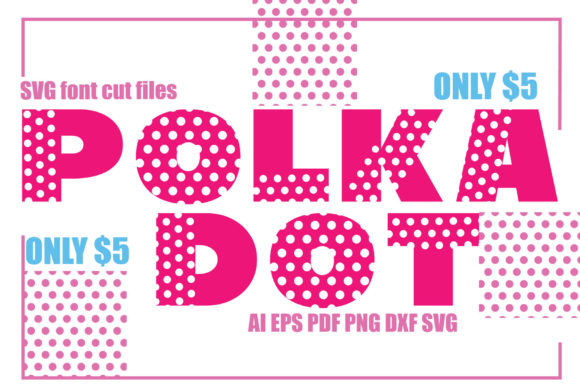
Polka Dot
A Designer’s First Glance: Playful, Timeless, and Surprisingly Versatile
When I opened the Polka Dot embroidery file for the first time—yes, before even loading it into my machine—I paused. Not because it’s flashy or complex, but because it’s *deliberately simple*. Clean circles. Consistent spacing. A rhythm that feels handmade without looking amateurish. As a designer who’s stitched hundreds of client projects—from boutique baby onesies to holiday market tote bags—I immediately pictured this on a soft organic cotton tea towel, a linen apron cuff, or the chest pocket of a child’s denim jacket. It doesn’t shout. It invites. That’s rare in digital embroidery files that often overcomplicate joy.
How Polka Dot Lives in Real Projects
Last week, I prepped a batch of custom embroidered tote bags for a local café’s staff launch. We needed something cheerful but not childish, scalable across 12 different bag colors (including charcoal heather and oatmeal linen), and durable enough for daily use. I tested Polka Dot as a subtle side-panel accent—not center chest, not oversized, just three staggered rows near the seam. The result? Crisp, balanced, and unmistakably hand-finished—even though it was machine-stitched. Customers kept asking, “Did you hand-embroider those?” That’s the quiet confidence this design carries.
It shines brightest where personality meets practicality: on baby onesies (tiny dots hold up beautifully on lightweight interlock), on sweatshirt cuffs (no distortion on stretchy ribbing when hooped correctly), and as minimalist patches for denim jackets. I also used it as a repeating border on pillow covers for a nursery collection—paired with soft pastel thread—and it read as cohesive, not busy. For Etsy sellers listing personalized gifts, Polka Dot is a low-risk, high-charm add-on: stitch it beside a monogram on a kitchen towel, or scatter it across the hem of a toddler’s dress. It doesn’t compete—it complements.
Where Polka Dot Needs Thoughtful Handling
Don’t assume simplicity equals foolproof. I learned this testing Polka Dot on a curved cap front. The circles stayed round—but only because I reduced stitch density slightly and added cutaway + tear-away stabilizer combo. On thin fabrics like rayon challis or delicate voile? Skip the dense fill stitch unless you’re using lightweight topping and backing. And if your project involves frequent washing—think kids’ tees or kitchen linens—test wash one sample first. Dense satin-stitched dots can pucker over time without proper stabilization.
Also: avoid cramming Polka Dot into tiny hoops (under 3” diameter) without checking corner clarity. Some versions of polka dot motifs collapse at small scale, but this one held clean edges down to ~8mm circles in my test. Still—always inspect the smallest dot in your chosen file format. And on dark fabric? Run a black-and-white mockup first. What reads as airy on white may vanish on navy unless thread contrast is intentional.
What It Adds to Your Craft Business—Beyond Stitching
As someone who consults with small shop owners and Etsy sellers, I notice how much weight a design carries beyond its visual shape. Polka Dot subtly elevates perceived value. It signals care—not just in execution, but in curation. When customers see consistent, well-spaced dots on a handmade apron, they don’t think “basic.” They think “thoughtfully made.” That builds trust faster than any product description.
For branding, it works as a quiet signature—stitched discreetly on a tag, repeated along a seam, or scaled large as a backdrop for a logo. It’s flexible enough for holiday embroidery (add red/green thread, stitch on burlap stockings), wedding gifts (ivory thread on linen napkins), or craft fair merchandise (small batch embroidered patches). And because it’s provided in multiple formats—including SVG, DXF, EPS, PNG, and PDF—it adapts smoothly whether you’re prepping for embroidery machines, vinyl cutters, or printable mockups for your Etsy listings.
Practical Notes Every Embroidery Designer Should Check
- Test first—on scrap fabric matching your final project’s weight and stretch.
- Review stitch density—especially if layering over textured fabric like terry cloth or bouclé.
- Confirm hoop size compatibility—the layout matters more than total dimensions; check spacing between dots relative to your hoop’s usable area.
- Inspect small details—zoom in on vector files to ensure no stray anchor points or misaligned paths.
- Try black-and-white mockups—this reveals contrast issues before stitching begins.
- Match stabilizer to fabric—cutaway for knits, tear-away for stable wovens, topping for napped surfaces.
- Verify licensing—since this is listed as a digital embroidery file for Crafts and Graphics, confirm whether commercial use (e.g., selling finished embroidered products or reselling the file) is permitted under KTwoP’s terms.
Final Thought: Polka Dot Isn’t Just a Pattern—It’s a Design Decision
In a world flooded with overdesigned, trend-chasing graphics, Polka Dot stands out by doing less—so your craftsmanship can do more. It doesn’t distract from fabric texture, thread sheen, or the handmade warmth of your finished product. Whether you’re stitching for a client, building a small shop brand, or creating personalized gifts for friends, this design supports your voice instead of overriding it. It’s reliable. It’s adaptable. And most importantly—it stitches cleanly, reads clearly, and feels like it belongs.
If you’re evaluating Polka Dot for your next embroidery project, ask yourself: Does it serve the product—or does the product serve it? With this file, the answer leans beautifully toward the former.